What would Christian worship look like if Jesus appeared in an American church today? Would he break bread and share a cup of wine, as described in the Bible, or would he reach for an acoustic guitar and lead a worship song?
That unusual question became part of a much larger discussion among scholars in Nashville about how music, money, technology, history, and changing church habits are reshaping Protestant worship in the United States.
Modern worship has changed sharply in recent decades. Traditional Protestant services often centered on prayer, hymns, a sermon, and Communion, also called the Lord’s Supper. Many churches now use long worship sets, large screens, contemporary bands, and topical sermons.
For many worshipers, singing has become one of the main ways they connect with God.
A New Question About Worship

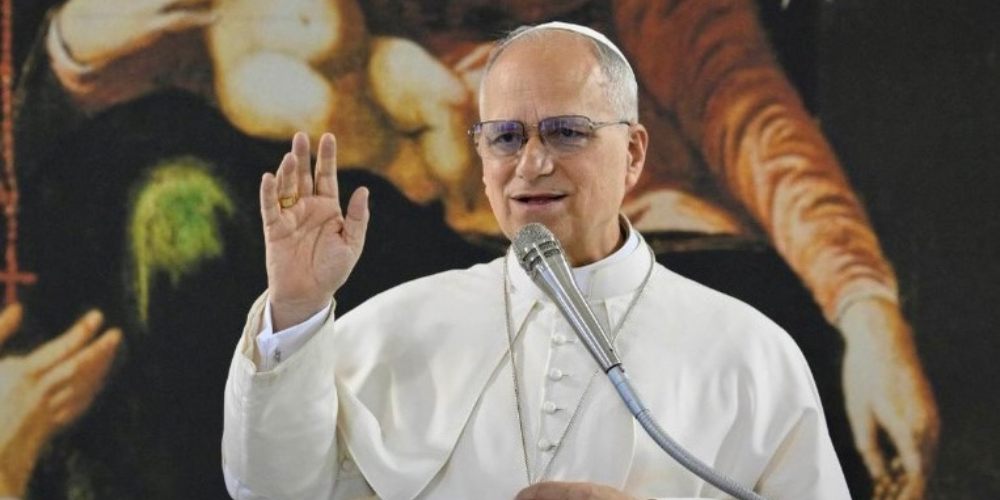
worship.calvin.edu | Paul Ryan highlights how modern church music delivers spiritual experiences once reserved for Communion.
Paul Ryan, a worship pastor at Calvin University and a staff member at the Calvin Institute for Christian Worship, raised a question that captured the tension surrounding modern praise music.
If Jesus were teaching people today, would he still use bread and wine and say, “Do this in remembrance of me”? Or, Ryan asked, would Jesus pick up a guitar and say, “Sing this in remembrance of me?”
The question came during a discussion led by Emily Snider Andrews, a Samford University scholar who studies how praise music can make God feel “experientially real” to people taking part in worship.
Ryan explained that scholars have had trouble finding precise language for what happens when large groups sing together in contemporary churches. The music is not designed to replace Communion. Still, singing can create a strong spiritual experience, and that raises questions about whether modern worship music has taken on a role once associated more closely with traditional Christian rituals.
The debate was part of the Conference on Contemporary Praise and Worship, held July 28-29 at Belmont University in Nashville. Around 60 scholars attended the two-day event.
Why Modern Worship Deserves Study
The Nashville conference focused on the larger meaning of contemporary worship rather than teaching church leaders how to perform new songs.
Adam Perez, an assistant professor of worship studies at Belmont and one of the conference organizers, said many existing gatherings for worship leaders concentrate on practical issues. Leaders may learn new songs, discuss church services, or exchange ideas about leading congregations.
This conference took a different approach. Scholars examined what contemporary praise music means for American Christianity and how it has influenced the way churches worship.
Perez questioned why relatively few academics study the subject on its own.
“How is it that very few people are talking about it?” he asked.
Scholars have discussed contemporary worship at larger gatherings, including events organized by the American Academy of Religion and the American Musicological Society. Yet praise music often becomes only one topic among many.
Perez said the Nashville meeting started with a simple assumption: contemporary worship matters and deserves focused academic attention.
He is also involved with the Worship Leader Research Project, which examines the songs churches use, the people who write them, and the experiences of worship leaders.
The influence of worship music also reaches beyond church walls. It has entered politics and popular culture, even though much of the conversation remains among Christians. Perez noted that this may explain why its broader cultural impact is sometimes overlooked.
“For certain Christians,” he said, “this is everything. For a lot of the rest of the people, this is just totally invisible.”
One Unusual Conference Feature
Despite being devoted to praise and worship music, the scholars at the Nashville conference did not sing together.
That decision was intentional.
Perez said the gathering was not meant to function like a worship-leader conference. Instead, participants were there to examine the history, economics, theology, and cultural impact of contemporary worship.
The event included roughly two dozen discussions. Speakers examined the development of worship music, the business behind it, songwriting, nostalgia, and the influence of data.
Melanie Ross, an associate professor of liturgical studies at the Yale Institute of Sacred Music, delivered a keynote titled “Everything New Is Old Again.” Her presentation connected current worship trends with earlier changes in church music.
How Money Shapes Worship Songs
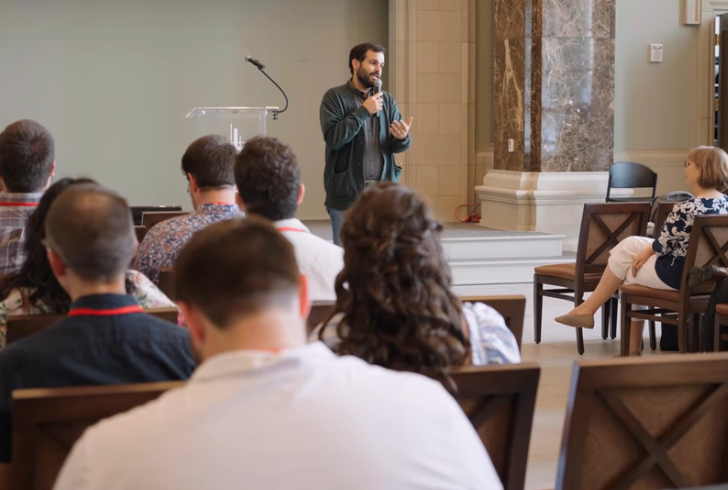
Instagram | adamperez808 | The Nashville conference prioritized the deeper meaning of modern worship over practical music training.
The business side of worship music received serious attention in Nashville.
Stacey Willbur of TIM Publishing, a company founded by worship leaders Chris Tomlin and Jason Ingram, discussed the growing role of data in the music industry.
Publishers can study streaming numbers, song performance, church usage, and other data points. Yet Willbur said songwriters should not allow statistics to replace the creative and spiritual work behind a song.
She encouraged writers to spend time praying, reading the Bible, and considering the people who will eventually sing their work.
Data becomes more useful after a song exists. At that point, publishers can study how audiences respond and decide where resources should go.
Money remains part of that process.
Jimi Williams, president of Jesus Culture Music and a longtime music industry professional, recalled working for Capital Christian Music, which is owned by Universal Music Group. Each year, he received a revenue target.
“We don’t care who you get it from,” Williams recalled his former bosses saying. “Just go find it. But you are going to hit that number.”
Jamie Rogers of Capital Music Group described the challenge of balancing financial responsibilities with the spiritual purpose of worship music. She wants artists to fulfill their calling, help churches, and reach large audiences. At the same time, a music company still has expenses and financial obligations.
“We’re not evil business people,” Rogers said. “I want this music to go far and wide for the kingdom, just as much as you.”
Rogers also warned against treating data as an answer to every question. Numbers can help guide decisions, but they cannot predict which song will connect with people.
Today's Worship Has Older Roots
Ross's keynote placed contemporary worship in a much longer history.
She compared today's Christian music industry with changes that took place from the 1920s through the 1960s. Her point was simple: arguments over commercialism and popular music are not new.
In the 1950s, Gladys Gollahon, a Catholic housewife from Cincinnati, wrote and recorded “Our Lady of Fatima.” She sent the recording to a local disc jockey, who played it on the radio. The song became popular in her hometown, and performers such as Tony Bennett later recorded their own versions.
Religious music began appearing in popular culture in other forms as well. Songs such as “Angels in the Sky” by the Crew Cuts, “The Bible Tells Me So” by Don Cornell, and Elvis's “Peace in the Valley” showed that faith-based music could find a mainstream audience.
The commercial success created criticism, too.
Pastor and author A.W. Tozer disliked the popular gospel songs of his era. In 1953, he argued that some church music had become too sentimental and commercially influenced. His criticism sounds familiar because contemporary worship music faces similar complaints today.
Ross also pointed out that financial concerns have always influenced church music. Publishing music costs money, and older songs can be less expensive to keep in circulation. As a result, the songs chosen by denominational editors were sometimes shaped by publishing costs as much as theological or musical preferences.
“The repertoire that denominational editors preferred also happened to be the repertoire that was the least expensive to publish,” Ross said. “I think that alignment deserves more attention than it usually receives.”
Why Simpler Worship Is Gaining Attention
Another discussion at the conference focused on nostalgia and the return of older worship songs.
One example came from the 2024 Passion Conference for college students. Participants sang Michael W. Smith's “Agnus Dei” for roughly 20 minutes in a stadium. The performance used a simple stage and vocals rather than the elaborate production often associated with large churches.
A similar approach appeared during the 2023 Asbury revival, where students gathered around a simple chapel stage and continued singing worship songs for days.
That setting differed sharply from some megachurch services, where worship can involve large bands, coordinated lighting, video screens, and fog machines.
Josh Sadlon, a worship pastor with Alliance Worship, part of the Christian and Missionary Alliance denomination, attended the Asbury event. He said people often describe its lack of production as something that made the gathering special.
The reality was more practical.
Students wanted to keep singing, but the college staff responsible for the sound system eventually had to leave. The students had to continue without the usual technical support.
“It was just the fact that no one had keys to the sound booth,” Sadlon said.
That detail offers an interesting counterpoint to the modern worship industry. A service does not always need complex equipment to create a meaningful musical experience. Sometimes, circumstances simply remove the machinery surrounding the music.
What the Guitar Question Means
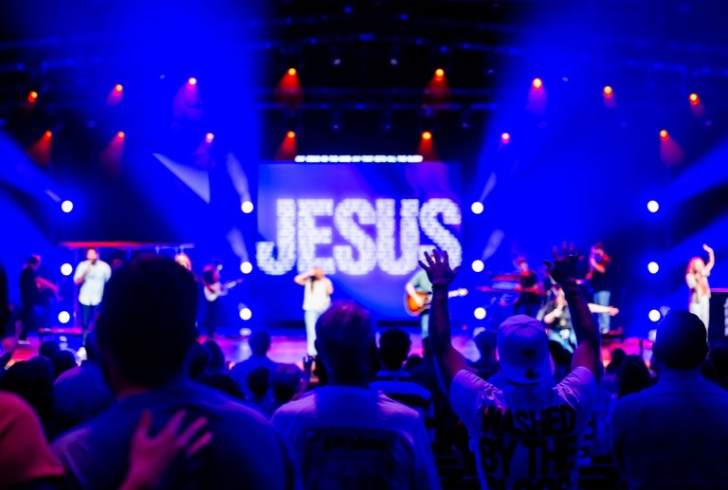
Pexels | The concept of Jesus playing guitar reflects the importance of music in modern faith.
The question about Jesus playing guitar is less about predicting what instrument Jesus would use and more about understanding the place music now occupies in Christian worship.
Contemporary praise songs can carry theology, memory, emotion, and communal identity. They can also influence which songs churches repeat, which writers gain attention, and how worshipers describe their experience of God.
At the same time, Communion remains a distinct Christian practice with its own history and meaning. Treating music as equivalent to Communion would raise theological questions that churches may answer differently.
The Nashville conference did not settle that debate. Instead, it showed why the question deserves serious discussion.
The Changing Sound of Worship
Modern worship brings together faith, music, business, technology, and culture. The songs used in churches are influenced by theology, songwriting choices, publishing costs, audience preferences, and the way congregations now experience worship.
Debates over church music are not new. Earlier generations questioned the growing popularity of gospel hymns and their connection to commercial music. Today, similar concerns focus on worship bands, streaming numbers, large-scale productions, and songs created for mass audiences.
At the same time, gatherings with simple stages and minimal production have shown that meaningful worship does not require elaborate technology or visual effects.
The Nashville conference did not offer a clear direction for the future of Christian worship. Instead, it examined how contemporary praise music has already affected American churches.
Paul Ryan’s question about Jesus picking up a guitar points to a broader issue: music now plays a significant role in how many Christians remember, express, and experience their faith. The discussion suggests that the future of worship may depend less on a particular musical style and more on what congregations believe music should accomplish when they gather.