A pale, silver-furred bear cub has become the latest talking point among viewers of the Katmai Bear Camera. The young brown bear appeared at Brooks River in Alaska on July 22, 2026, and its unusual coat quickly led to questions about whether it could be a “pizzly,” a rare hybrid between a polar bear and a grizzly bear.
Experts, however, say there is no strong evidence that this cub is a hybrid. Its light fur may simply reflect the wide range of natural coat colors found among brown bears in Katmai National Park and Preserve.
Why the Cub Looks So Different
Gordon Clagget, a spokesperson for the National Park Service Alaska office, confirmed that the first-year cub appeared on the live camera in July. He said the bear’s coloring is most likely linked to genetics.
“There are many bears on the Brooks River, both male and female, with very blonde fur,” Clagget said. He also noted that a bear’s coat can become darker with age, meaning the cub’s current appearance may not reflect its adult coloring.
Mike Fitz, a naturalist with Explore.org, reached a similar conclusion. He pointed out that Katmai sits too far south of the current polar bear range in Alaska for a polar bear and brown bear pairing to be a likely explanation.
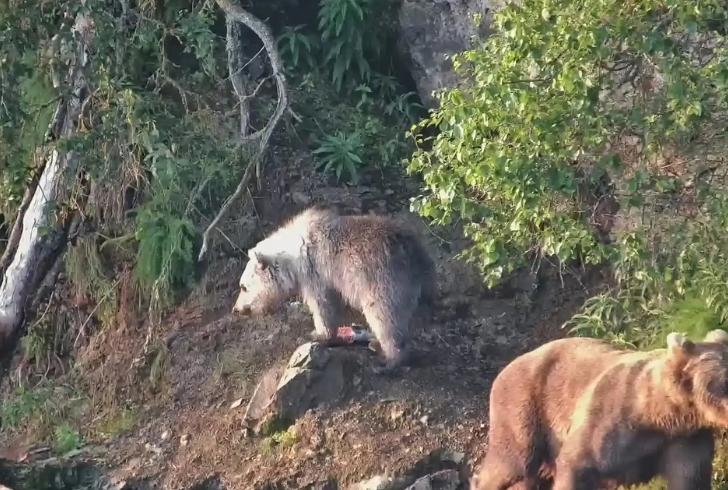
Instagram | stokes.ocw | A silver-furred bear cub at Alaska’s Brooks River has sparked speculation that it might be a polar-grizzly "pizzly" hybrid.
Fitz also said the cub does not appear to show signs of leucism or albinism. Instead, he believes the animal falls at the very light end of the normal brown bear color range seen in Katmai.
“Every few years at Brooks River, a young cub will arrive with similarly colored light blond fur,” Fitz said.
A Rare Coat, Not a Hybrid
The cub is believed to have been born in spring and is about six months old. Its sex has not yet been confirmed. Viewers have seen the young bear with its mother and have tentatively identified the sow as Bear 677, an adult female that has visited Brooks River since 2025.
Brown bears can show major differences in coat color. Some have dark brown fur, while others appear blond, cream-colored or almost silver. Genetics can play a large role in those differences.
Fitz also raised another possibility. The pale coat could offer some benefit in certain conditions, such as providing camouflage when light levels are low. Still, coat color is unlikely to determine whether the cub survives.
“Food availability, mother’s guidance, and mother’s protection are likely to be far more important factors than fur color,” Fitz said.
More Cubs at Brooks River in 2026
The unusual cub has appeared during a notable year for bear watchers at Brooks River. The 1.5-mile-long river draws large numbers of brown bears because of its rich salmon runs.
As of August 10, Fitz said researchers had recorded more than 18 bear families and 34 cubs. Of those cubs, 28 were born during the spring.
That number is closely linked to the food supply. A huge salmon run reached Brooks River in 2025, giving many female bears access to large amounts of food before entering their winter dens.
“A gigantic salmon run arrived in 2025 at Brooks River along with many single female bears fishing the river,” Fitz said. “The sheer abundance of food allowed those females to enter the den with ample fat to sustain the birth of their litters in mid-winter.”
For bear mothers, that stored energy can make a major difference. Cubs are born during winter while their mothers remain inside dens. After birth, the mother must provide milk and protection until the family emerges in spring.
A Season With Both Growth and Loss
The increase in cubs has brought plenty of attention, but the 2026 season has also included serious losses.
On July 28, live cameras recorded the death of a cub belonging to Bear 909. An unrelated female, Bear 806, killed and ate the cub. Fitz said the incident is believed to be the first documented example of infanticide near Brooks River.
Another cub was killed by a different female bear on August 2.
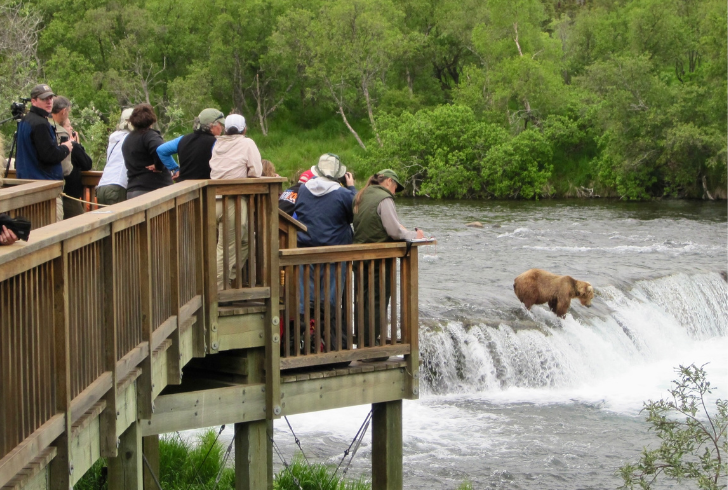
Instagram | mattandkarensmith | Katmai National Park in Alaska spans 4 million acres and is famous for its annual Fat Bear Week competition.
These events show the risks young bears face even in an area with abundant food. Cubs depend heavily on their mothers during their first months, when they remain vulnerable to other bears and changing conditions around the river.
Katmai National Park and Preserve covers more than 4 million acres near Kodiak, Alaska. The park is also home to Fat Bear Week, the annual online competition that lets fans vote for bears based on their seasonal weight gain.
Fat Bear Week 2026 is scheduled for September 22 through September 29. First-year cubs can gain weight at an impressive pace. According to Explore.org, cubs may grow from about one pound at birth in January to 70 pounds or more by October.
The silver cub is still far from becoming one of the competition's famous heavyweights. For now, its unusual coat has made it one of the most closely watched young bears at Brooks River.
What Experts Will Watch Next
The cub’s appearance may change as it grows. Its fur could become darker, or it could retain much of its current pale coloring. Researchers and camera viewers will have more information as the bear matures.
For now, the available evidence points toward a naturally light-colored brown bear rather than a polar bear hybrid. The cub’s unusual appearance is interesting, but its survival will depend on more practical matters: enough food, protection from threats and continued care from its mother.
Fitz described the growing number of cubs as an important sign of the food available at Brooks River. “Bear cubs are cute and fun to watch. More importantly, though, they are a sign of abundance,” he said.
The silver cub may have started the conversation because of its color, but the larger story is about the conditions that allow so many young bears to survive. At Brooks River, the strength of the salmon runs continues to shape the lives of bears, from mothers preparing for winter to cubs taking their first steps toward adulthood.