An outdoor fountain adds movement, sound, and character to a backyard. The steady flow of water creates a peaceful setting, attracts birds, and gives patios or gardens a polished look.
Still water, sunlight, and organic debris can quickly turn that relaxing feature into a green, slippery mess. Algae buildup often appears as a slimy film on the fountain walls, cloudy water, or an unpleasant odor that spreads around the yard.
Outdoor fountains are not the only places where algae appear. Bird baths, splash blocks, swimming pools, and damp walkways can also develop algae when exposed to moisture and heat for long periods.
The good news is that algae growth can be controlled with regular maintenance and smart fountain placement. A few simple habits can keep the water cleaner, clearer, and safer for pets and wildlife.
What Causes Algae to Grow?

Pexels | Mimi | Sunlight, stagnant water, and organic waste quickly trigger algae buildup in outdoor fountains.
Algae are tiny aquatic organisms that grow in water and attach themselves to hard surfaces. Unlike regular plants, algae do not have roots, stems, or leaves. They survive by using sunlight and nutrients found in water.
Outdoor fountains create an ideal setting for algae because they often combine warmth, moisture, and sunlight. Slow-moving or stagnant water increases the problem. Organic waste such as grass clippings, fertilizer residue, fallen leaves, pet waste, and bird droppings also feed algae growth. Once nutrients begin collecting in the water, algae can spread fast across the basin and fountain walls.
Chlorophyll allows algae to produce energy from sunlight. Because of this process, fountains placed in direct sun usually develop algae faster than those located in shaded areas.
Can Algae Damage a Fountain?
Algae may seem harmless at first, but heavy growth can create several issues. Thick algae layers stain stone, concrete, and ceramic surfaces. They can also clog fountain pumps and reduce water circulation. When pumps struggle to move water properly, mechanical parts wear out faster.
Some algae blooms may release toxins that are harmful to pets and wildlife. Dirty fountain water can also encourage bacteria growth, creating unhealthy conditions for birds or animals that drink from it.
Slippery algae buildup around the fountain basin may even create a safety hazard on nearby walkways or patios.
Best Ways to Prevent Algae in Outdoor Fountains
Preventing algae is easier than removing thick buildup later. Regular care keeps the fountain looking fresh while protecting its pump and surfaces from damage.
1. Place the Fountain in Partial Shade
Sunlight is one of the biggest triggers for algae growth. A fountain placed in a shaded area usually stays cleaner longer because algae struggle to grow without direct light.
At the same time, avoid placing the fountain directly beneath trees or shrubs. Leaves, pollen, twigs, and flower petals fall into the water and break down over time. That organic material becomes food for algae.
Good airflow also matters. Open spaces with light breezes help water circulate naturally and reduce stagnant conditions.
2. Keep Debris Out of the Water
Even in cleaner areas, wind can carry dirt and plant debris into the fountain. Checking the basin once a week helps stop buildup before it becomes a problem.
Use a small skimmer or net to remove floating leaves, insects, and grass clippings. Decorative fountain covers or mesh nets can also block larger debris while still allowing water flow.
Regular debris removal reduces nutrient buildup and helps maintain better water quality.
3. Change the Water Frequently
Old standing water creates the perfect environment for algae. Draining and refilling the fountain every two to four weeks keeps minerals, dirt, and organic particles from collecting.
Before adding fresh water, wipe the basin with a soft cloth to remove residue along the sides and bottom. Distilled water may help reduce mineral deposits and cloudiness, especially in areas with hard water.
During hot summer months, fountains may need more frequent water changes because heat speeds up algae growth.
4. Keep the Pump Running
Moving water makes it harder for algae to spread. Fountain pumps continuously circulate water, preventing the stagnant conditions algae prefer.
A running pump also increases oxygen levels in the water. Better oxygen circulation limits the nutrients algae need to thrive.
Check water levels regularly to make sure the pump remains fully submerged. Low water levels can damage the pump and reduce circulation efficiency.
How to Clean an Outdoor Fountain Safely
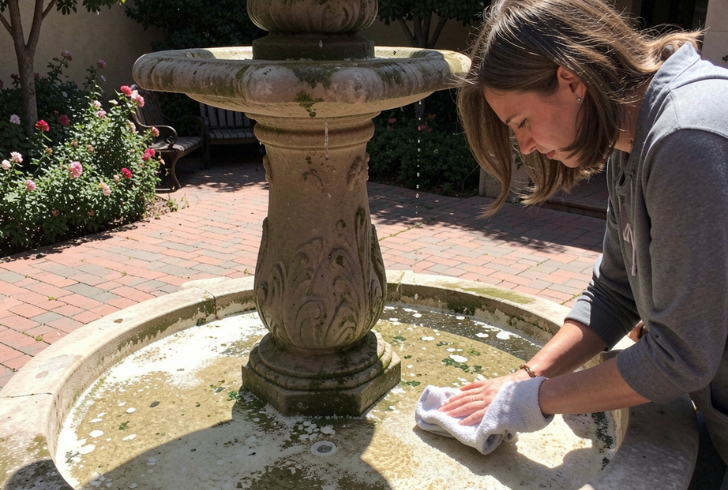
Freepik | Clean your outdoor fountain with mild solutions to protect its surface.
Strong chemical cleaners may remove algae quickly, but harsh products can damage fountain surfaces and harm birds, pets, or nearby wildlife. Gentle cleaning methods are usually safer and just as effective.
Step 1: Shut Off the Fountain
Turn off the power supply and stop the water flow before cleaning. Drain the fountain completely and remove leaves, rocks, and decorative items from the basin.
Step 2: Wipe Down the Interior
Use a soft sponge or cloth to clean the inside surfaces. This removes light buildup before it hardens into thicker algae patches.
Step 3: Remove Stubborn Algae
For tougher spots, scrub the basin with a soft-bristled brush and a mixture of equal parts vinegar and water. Allow the solution to sit for five to fifteen minutes before rinsing thoroughly.
Commercial fountain cleaners and algaecides can also help, though product labels should always be checked carefully before use.
Step 4: Clean the Pump
Follow the manufacturer’s instructions when cleaning the pump and its components. Algae often collect inside small openings and tubing, which reduces water flow.
Step 5: Refill With Fresh Water
Distilled water can reduce mineral buildup and help fountains stay cleaner longer. Some algaecides also prevent future growth and improve water clarity.
Still, not every algaecide is safe for fish, birds, pets, or aquatic plants. Non-toxic fountain treatments designed specifically for outdoor water features are usually the safest option.
Outdoor fountains stay cleaner when algae prevention becomes part of regular maintenance instead of an occasional fix. Shade, water circulation, debris removal, and routine cleaning all work together to slow algae growth naturally.
Clear water not only improves the appearance of a fountain but also protects the pump, reduces odors, and creates a healthier environment for birds and wildlife. With steady care and simple upkeep, an outdoor fountain can remain a relaxing feature instead of turning into a green, slippery mess.