Stephen Hawking, born January 8, 1942, left a mark on modern physics that extended far beyond equations and black holes. He also provoked global conversations about faith, God, and belief. Throughout his life, Hawking held firm: the universe, he argued, does not require a divine creator. His scientific reasoning challenged religious assumptions with clarity, leaving little room for doubt.
A Birthday Marked by Thought
Hawking’s birthdays were quiet, reflective affairs. Celebrations usually took place at home or in Cambridge, shared with his children and a small circle of close friends. His sharp humor and self-deprecating jokes often filled the room with laughter.
There were no prayers or religious rituals. Instead, these moments became opportunities for discussion, debate, and contemplation—mirroring his broader worldview, where curiosity and inquiry held more weight than tradition or ceremony.
A Self-Described Scientific Atheist

Instagram | thesammar.alavi | Hawking firmly rejected the concept of the soul.
Hawking openly identified as a “scientific atheist.” In “A Brief History of Time”, he explained that he viewed nature itself as “God,” not as a personal or conscious being, but as the system of laws governing the universe. According to him, physics alone could explain how the universe began and how it continues to function.
He argued that belief in God often filled gaps in human understanding. As scientific knowledge expanded, those gaps narrowed. In his view, religion gradually lost relevance as science offered clearer explanations for natural phenomena.
No Room for the Soul or the Afterlife
Hawking firmly rejected the concept of the soul. In a 2011 interview with The Guardian, he stated that the soul was an illusion created by the brain. He described belief in life after death as a response to fear rather than evidence.
He dismissed ideas such as:
Heaven and hell
Reincarnation
Immortal consciousness
According to Hawking, these concepts provided emotional comfort but lacked scientific support. For him, the human mind ended when the brain ceased to function.
Views on Religion and Morality
Hawking remained deeply critical of organized religion. He described it as unscientific, authoritarian, and driven by fear-based morality. Throughout history, he believed religion had slowed scientific progress by discouraging questioning and independent thought.
While he acknowledged that humans could experience a sense of spirituality, he stressed that such experiences did not require belief in God. Moral values, he said, developed through social agreement and human responsibility, not divine command.
Science Replacing Fear-Based Beliefs
Hawking often pointed out that in earlier eras, people attributed unexplained events to God. Illness, natural disasters, death, and even electricity once fell into this category. As science advanced, natural laws replaced supernatural explanations.
He viewed ideas of divine punishment, heaven, and hell as tools designed to instill fear. Morality built on fear, in his assessment, lacked strength and sustainability.
Criticism of Organized Faith
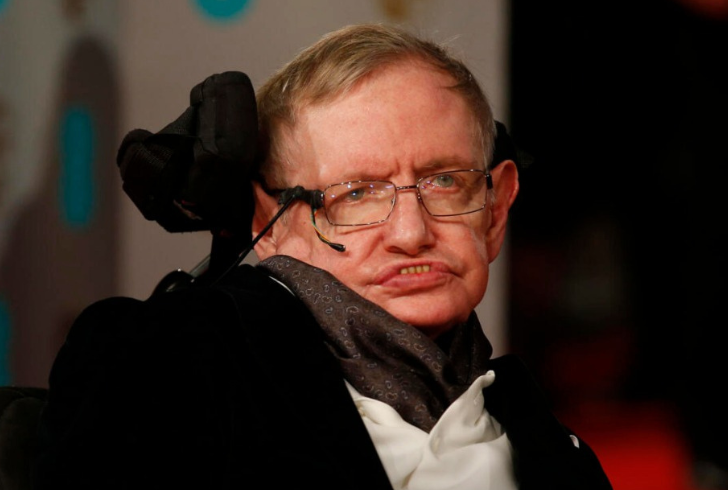
Instagram | tayog.in | Hawking argued science relies on evidence while religion protects power through dogma.
A persistent critic of organized religion, Hawking argued that many institutions aligned themselves with power and discouraged questioning. He drew a sharp contrast between religion, which often asks for belief without evidence, and science, which demands proof and verification.
Though he frequently discussed Christianity, he made it clear that any faith built on supernatural claims is vulnerable under scientific scrutiny. No ideology, he contended, is exempt from investigation.
Interest Without Devotion
Hawking’s visits to churches and other religious sites were fueled by curiosity rather than worship. He appreciated the architecture, the history, and the cultural significance of these places. He also engaged in thoughtful dialogues with priests, philosophers, and theologians on questions of God and the universe.
Yet Hawking never altered his position. His views remained firmly rooted in logic, evidence, and scientific reasoning.
For him, rejecting God was not an act of rebellion—it was a reflection of his dedication to evidence-based understanding. Hawking saw the universe as operating according to discoverable laws, and he placed science at the center of human knowledge, championing curiosity, critical thinking, and intellectual honesty that continue to influence how people approach the search for truth.