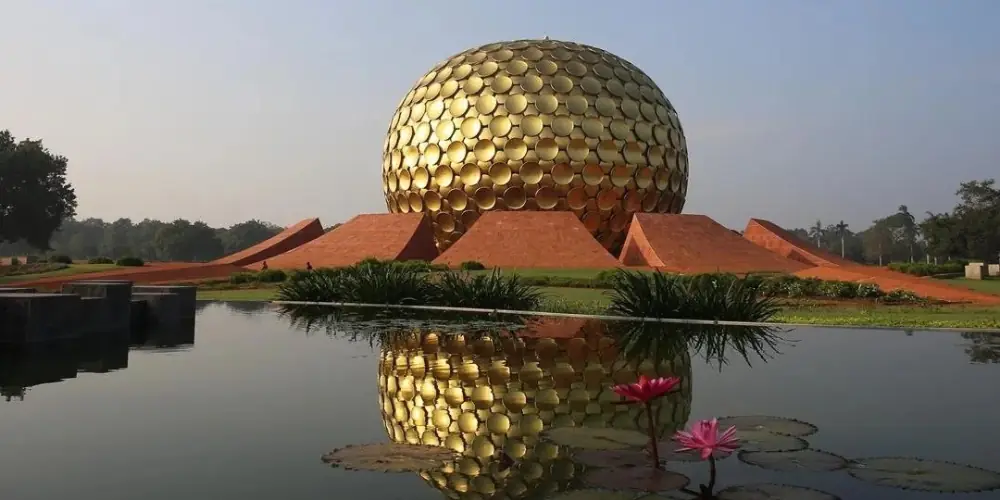
Just a short distance from Pondicherry in southern India stands Auroville, an autonomous settlement that continues to draw global curiosity. Known as the “city of dawn,” Auroville operates as both a spiritual experiment and a social framework that challenges traditional ideas of ownership, governance, and community life.
Its vision remains bold, its reality layered, and its presence impossible to ignore.
The Origin of a Universal Vision
Auroville was founded in 1968 as an ecovillage rooted in the teachings of Sri Aurobindo and his spiritual collaborator Mirra Alfassa, widely known as “Mère” or “Mother.” Their aim centered on creating a place beyond borders and belief systems. As cited by Terranuova, the founding vision described Auroville as:
“A universal town where men and women of all countries are able to live in peace and progressive harmony above all creeds, all politics and all nationalities. The purpose of Auroville is to realise human unity.”
This idea shaped every element of the settlement, from land use to daily life, placing shared humanity above individual identity.
Life Without Ownership or Government
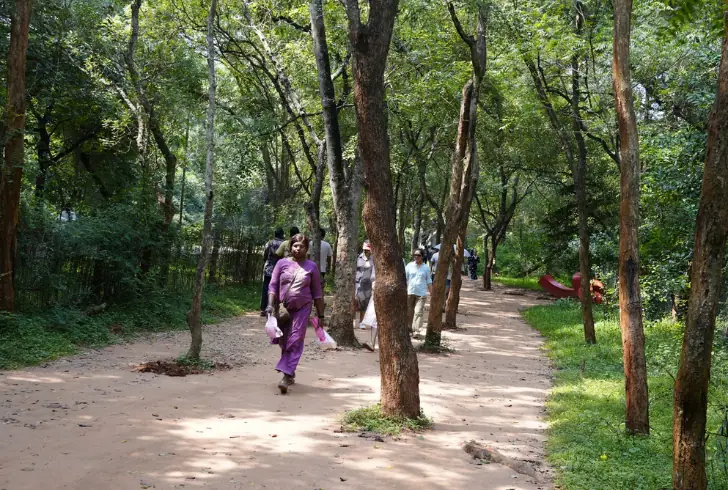
Today, Auroville is home to nearly 3,000 residents representing countries from across the globe. The community operates without a formal government. Decisions emerge through collective discussion rather than centralized authority. Land belongs to the community, not individuals, and private ownership is discouraged in principle.
Daily life depends on contribution rather than profit. Residents support the collective through volunteer work, shared responsibilities, and mutual aid. This structure aims to remove competition while encouraging cooperation and self-awareness.
Inner Growth and Environmental Responsibility
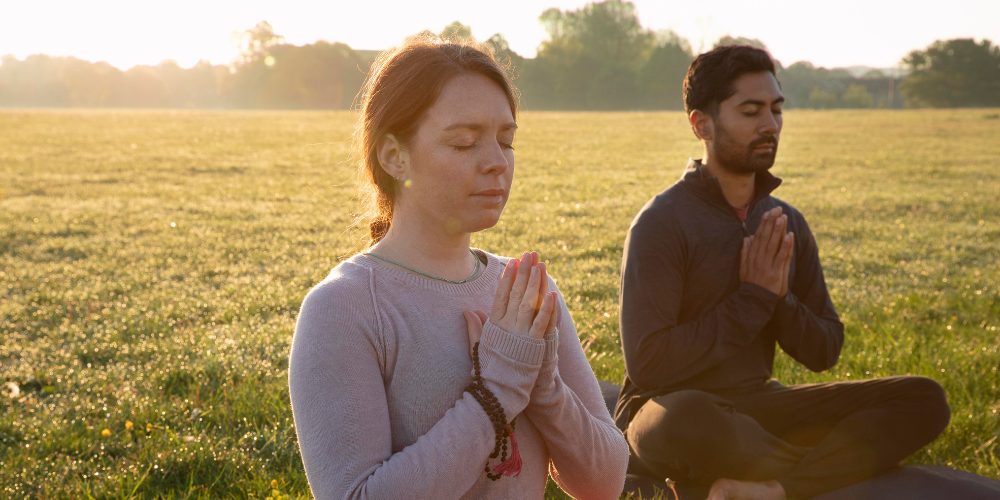
At the heart of Auroville stands the Matrimandir, a striking golden sphere visible from afar. This structure serves as the spiritual center of the city. Silence defines the space, and meditation is treated as a practical tool for personal development and inner connection rather than ritual practice.
The emphasis on inner growth aligns with Auroville’s broader goal of unity, placing personal awareness alongside collective harmony.
Ecology is equally central to life in Auroville. Environmental education plays a central role in community life, shaping how residents interact with the land. Organic farming, reforestation, and sustainable resource use form part of everyday routines rather than isolated projects.
This focus reflects a belief that harmony with nature supports both spiritual and social balance.
A Community Facing Its Own Contradictions
Despite its ideals, present-day Auroville reflects challenges that differ from its original vision. Reports from La Stampa point to economic imbalance within the community. Many foreign residents rely on personal financial resources, while local workers often depend on lower-paying roles inside Auroville. This gap raises concerns about equality and shared responsibility.
Concerns have also emerged around increased authoritarian decision-making and urban planning choices viewed as harmful to the environment. Some residents describe a weakening sense of collective spirit, suggesting a shift away from the founding principles of openness and shared growth.
Similar Communities Around the World
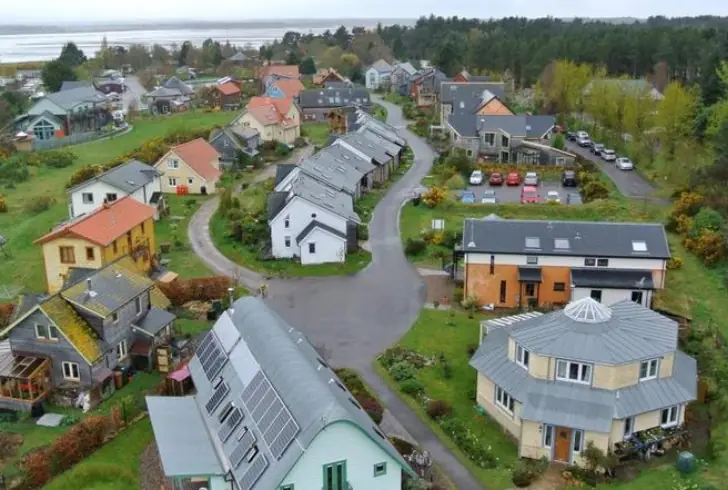
Auroville is not alone in its pursuit of cooperative living and sustainability. Comparable communities exist across continents, including:
Findhorn in Scotland
Tamera in Portugal
Damanhur in Italy
Twin Oaks and The Farm in the United States
Los Horcones in Mexico
Each community approaches shared living differently, yet all aim to balance harmony between people and the natural world.
A Place of Meaning, Debate, and Questions
For many, Auroville functions as a spiritual refuge where personal reflection and nature-based living shape daily life. For others, it represents an ideal that has faced challenges, evolving into a space that can feel selective rather than fully inclusive.
Despite this, Auroville continues to spark conversations about alternative ways of living, raising questions about unity, sustainability, and human potential.
Its ongoing evolution reflects both the strength of its founding vision and the complexities of sustaining it over time, serving as a reminder that the pursuit of a better way of living remains alive.